
Preview- work on the easel is almost done…
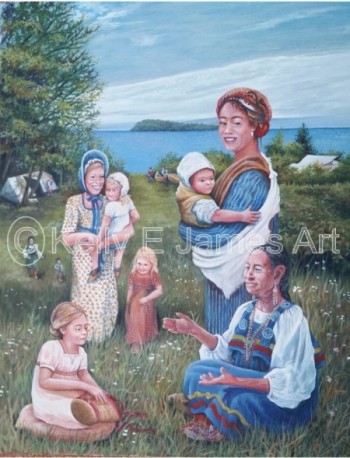
This is a tricky part of any painting. Now is when I need to stop and decide if this painting is complete or if there are little things that will haunt the viewer (or me) so it becomes more about scrutiny than painting. I keep walking away and coming back to it because that’s when I see small errors here and there. It is fixing those that I consider fine tuning.
But let me take a step back and let you know the history of what you’re seeing so you can consider the work in context. This painting is what I refer to as a suggested commission. Translated, that means that I was asked to paint a piece with a list of criteria with the possibility of fulfilling the expectations and directives of the patron. I am not selling the original but publication rights. Unlike a flat-out commission where the patron and I enter into a contractual agreement and half of the agreed on fee is advanced to initiate the beginning of the project, I have painted what was suggested by the patron with mutual hope that they might pick it up. If it isn’t what they want they can just say no.
My directive for this painting from my patron included the following:
a camp scene…in daylight….prefer women…even include children – that would be good…. early 1800 might be good – we could use more regency time-frame.
My thinking process (and even articulating this becomes a work in process):
Camp in the remote sites of the northwest territories are energetic, transient towns (as are the re-enactments of those camps) and they thrive on the aggregation of people from vastly different cultures, ethnicities, and sensibilities. Nowhere is the seamless blending of cultures more evident than in the community of women. Fiercely determined and loyal, we share many bonds: of burdens in both the communal and individual work; of roles as wives, mothers and business partners in these aggregated societies; and even of shared appreciation and empathy for our sisters with regard to everything from material culture to levels of gender respect or status. Occasionally, this undercurrent flows as a barely noticed society within a camp’s social network. However, in camps then and now, women assemble in small, comfortable groups to laugh, to share, to nurture and to build community, generation after generation.



 Kelly E. James